Wet Carpet Drying in the USA
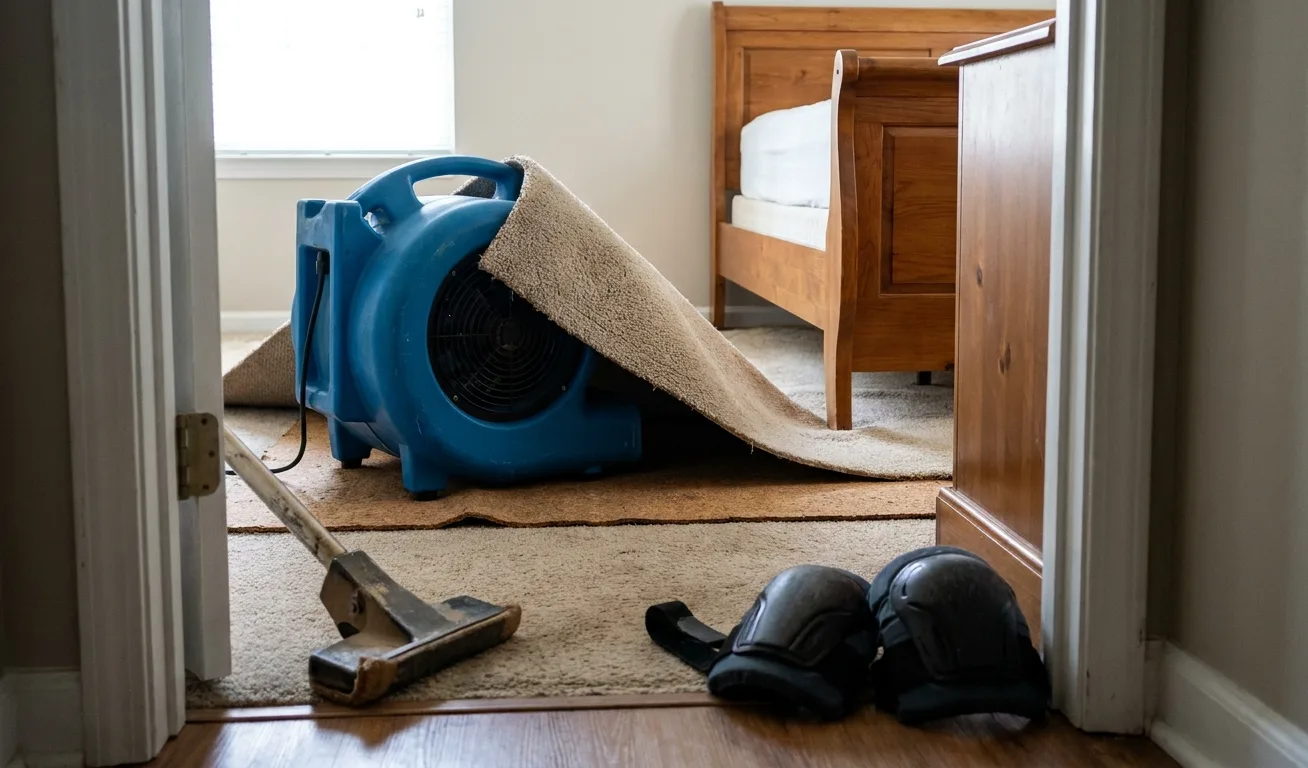
Same Day Water Damage Restoration crews extract standing water from carpet first. They lift edges to check pad saturation and subfloor cupping. Moisture meters track readings at multiple points before equipment placement. Technicians remove the pad when readings exceed safe levels to avoid trapped moisture that feeds mold.
Our teams cut out affected sections of carpet when dyes bleed or backing delaminates. They install new padding after subfloor drying completes. Fans and dehumidifiers stay positioned until equilibrium moisture content matches unaffected areas. Homeowners should move furniture off wet carpet before arrival. Assess roof leak impact following wet carpet drying then navigate to Same Day Water Damage Restoration homepage in USA.
Warning Signs of Wet Carpet
- Dark stains spreading along baseboards from wicking
- Musty odor rising when carpet is stepped on
- Carpet feels spongy and stays damp after mopping
- Visible water lines on walls near floor level
- Floorboards starting to buckle or separate at seams
Common Causes of Carpet Saturation
Appliance supply lines crack and release water under kitchen or laundry carpet. Overflow from tubs or sinks runs under doors and soaks padding. Roof leaks drip through ceilings and collect in carpet edges. Our technicians trace the source before starting extraction.
Sewage backups push water through floor drains and saturate carpet backing. Foundation cracks allow groundwater to rise into crawl spaces and wick into carpet. Each case requires different containment steps to limit spread.
Inspection and Moisture Checks
Technicians probe subfloor with pin meters at grid points to map wet zones. They check under baseboards for hidden water trapped against drywall. Carpet pad density is noted because foam holds more water than felt. Readings guide how much material must be removed versus dried in place.
Thermal imaging shows temperature differences that indicate trapped moisture under carpet. Crews document every meter reading on a floor plan before starting work. This prevents missing pockets that later cause mold on the subfloor.
Drying Process and Material Decisions
Carpet is separated from tack strips and rolled back for pad removal. The pad is discarded when saturated because it cannot be dried fast enough. Subfloor is exposed and dried with low-grain refrigerant dehumidifiers plus air movers aimed at the wood. Carpet is cleaned and reinstalled once moisture levels normalize.
When subfloor plywood delaminates, sections are cut out and replaced before new pad goes down. Insulation under the floor in crawl spaces is pulled if wet to stop mold growth upward. All removed materials are bagged on site for disposal.
Homeowner Steps Before Crew Arrival
Shut off water at the source if the leak is active. Move items off the carpet to prevent further staining from dyes. Blot standing water with towels but avoid using household fans that can spread spores. Do not walk on saturated carpet to limit embedding dirt into fibers.
Note the time water first appeared for later drying calculations. Keep children and pets away from the area. These actions reduce secondary damage until our technicians reach the site.
Wet Carpet Drying questions
Can carpet be saved after water exposure?
Carpet can often be saved if the pad is removed quickly and the backing stays intact. Technicians test for dye bleed and delamination before deciding on reinstall. If backing separates the carpet is replaced.
How long does subfloor drying take?
Drying time depends on wood type and initial moisture content. Crews run equipment until pin meter readings match unaffected areas. This usually requires multiple visits to confirm stability.
Is the pad always replaced?
Saturated pad is removed because foam traps water and grows mold fast. New pad is installed after subfloor dries to the correct level. Felt pad may sometimes be dried but is checked for odor first.
What happens to wet insulation under carpet?
Wet insulation in crawl spaces is pulled out to stop moisture from rising into the subfloor. Replacement insulation is added only after the space is fully dried and sealed.
Schedule Wet Carpet Drying
Contact Same Day Water Damage Restoration to extract water from carpet and restore subfloor conditions across the USA.