
Crawl Space Drying in the USA
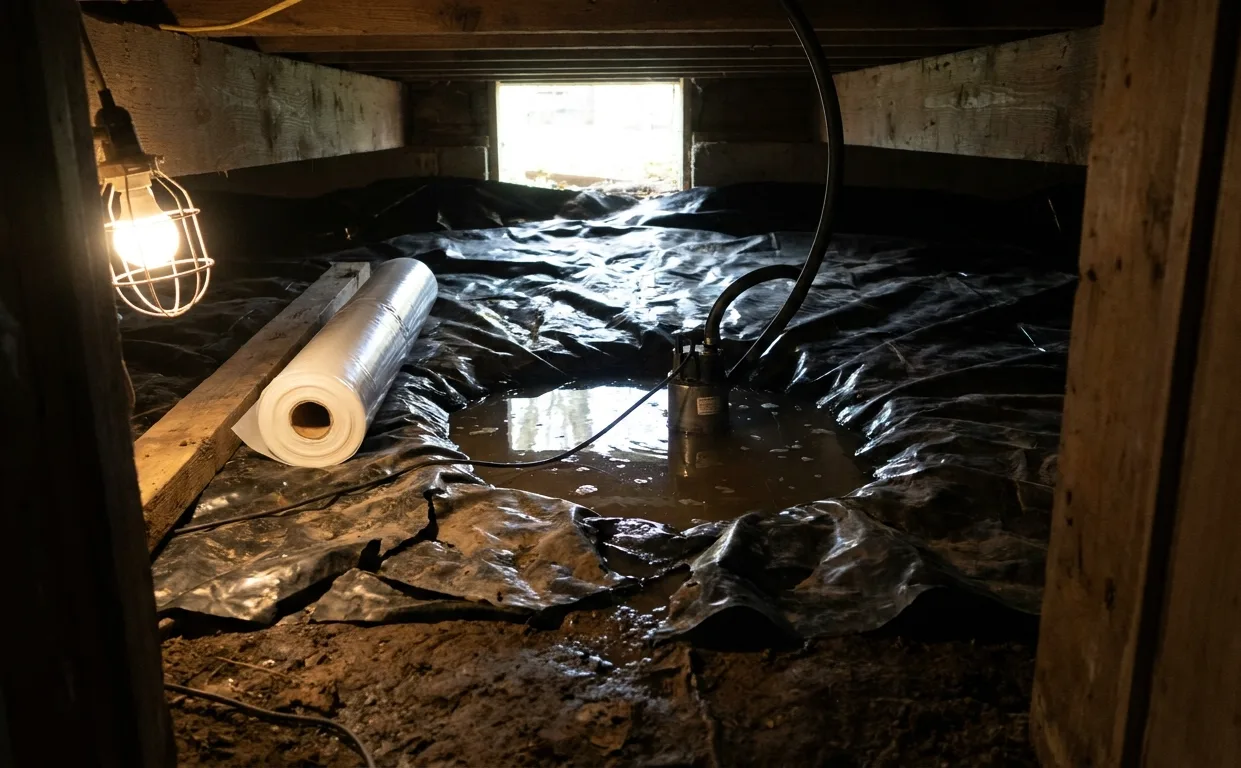
Our technicians arrive with pumps and moisture meters. They remove standing water from the crawl space first. Then they test every floor joist and sill plate for elevated readings. Wet fiberglass batts get pulled out before mold forms on the paper facing. Dehumidifiers run on closed loop until wood moisture drops below fifteen percent.
We inspect the vapor barrier for rips and check where soil touches wood. Standing water often comes from broken supply lines or roof drainage that pools against the foundation. Technicians mark saturated sections on a diagram so replacement insulation matches exact dimensions of each bay. Cut out moldy drywall sections before crawl space drying and reach Same Day Water Damage Restoration homepage for USA.
Visible and Measurable Indicators
- Musty odor noticeable through floor registers
- Dark staining along bottom edges of joists
- Soft spots in subfloor when walking above
- Condensation on metal ductwork or pipes
- Vapor barrier floating or covered in silt
Common Entry Points for Excess Moisture
Groundwater seeps through block walls when grading slopes toward the house. Roof runoff from clogged gutters overflows and enters vent openings. Appliance hoses routed under the floor leak at compression fittings and soak the dirt below the joists. Each source leaves distinct silt patterns that technicians photograph before any equipment starts.
Plumbing leaks from bathroom drains often travel along the bottom of the subfloor and drip at the lowest point. Technicians trace the path with infrared cameras to locate hidden wet spots without removing drywall first. Soil that remains wet for weeks allows fungal growth to start on the underside of the sheathing.
We document every penetration where pipes or wires enter the crawl space. Missing or displaced insulation around these openings lets warm air carry humidity down from the living area and condense on cold surfaces.
Tools and Readings Taken on Site
Technicians place pin meters on multiple joists at forty-five degree angles to reach the center of the wood. Readings above twenty percent trigger immediate removal of adjacent insulation. Relative humidity in the crawl space air is logged hourly once dehumidifiers begin. Surface thermometers on ductwork show where condensation is forming.
We pull back vapor barrier edges at several points to inspect the soil condition underneath. Any standing water deeper than one inch gets pumped to a containment barrel first. Technicians measure the distance from soil to joists to calculate how much new rigid insulation will fit without touching dirt.
Airflow patterns are checked with a smoke pencil at every vent. Blocked vents on one side create pockets where moisture stays trapped even after drying equipment runs.
Drying Sequence and Material Choices
Pumps remove bulk water. Then commercial air movers are placed to create a circular pattern that moves air across every exposed surface. Desiccant dehumidifiers extract moisture from the air while technicians monitor wood moisture every four hours. Once levels stabilize, saturated fiberglass is cut out in whole sections to avoid fiber release.
We install new closed-cell foam board against the rim joists where space allows. Six-mil reinforced poly sheeting replaces torn vapor barriers and gets sealed to the foundation walls with mastic. Any rotted sill plate sections are sistered with pressure-treated lumber before new insulation goes back in the bays.
After equipment removal, technicians leave the crawl space vents open or closed according to the local climate zone to prevent future condensation cycles.
Steps Homeowners Can Take Safely
Shut off water at the main valve if a supply line is the source. Move stored items away from the access door so technicians can bring equipment through without delay. Do not enter the crawl space if joists feel spongy underfoot or if sewage is present.
Note which rooms feel coolest or show cupping in hardwood floors. This helps crews focus initial meter checks. Keep children and pets out of the affected area until water is gone and surfaces are dry.
Crawl Space Drying questions
How long does equipment stay in the crawl space?
Equipment runtime depends on initial moisture content and wood species. Technicians return daily to record readings until joists reach acceptable levels. Most jobs finish in three to five days once pumps and dehumidifiers run continuously.
Do you replace insulation or just dry it?
Fiberglass that has been submerged is removed and discarded. Closed-cell foam or mineral wool can sometimes be retained if moisture readings allow. Technicians decide on site after testing each piece.
What happens if mold is already growing on joists?
Visible mold is wiped or HEPA vacuumed after drying. Heavily affected wood sections are cut out if structural strength is compromised. We do not apply sealers until all active moisture sources are corrected.
Can I store belongings in the crawl space afterward?
Once moisture levels are stable and the new vapor barrier is sealed, the space can hold items again. Keep boxes on pallets so air circulates underneath and check periodically for any new leaks.
Request Crawl Space Drying
Call Same Day Water Damage Restoration to schedule moisture testing and water extraction in your crawl space.