
Dehumidification and Drying in the USA
Our technicians arrive with moisture meters and thermal cameras. They scan drywall seams, base plates, subfloor edges and insulation pockets to map wet zones left after initial water extraction. Readings above 15 percent trigger targeted drying instead of blanket equipment placement.
Dehumidification and Drying targets trapped moisture that evaporates slowly on its own. Technicians set refrigerant or desiccant units based on ambient conditions, then direct airflow across exposed surfaces and into wall cavities through small access cuts when needed. Examine crawl space after handling dehumidification and drying and open Same Day Water Damage Restoration homepage covering the USA.
Warning Signs Moisture Remains
- Musty odor rises from baseboards after carpets dry.
- Floor feels cool to touch compared with surrounding areas.
- Drywall shows faint water rings or slight swelling.
- Wood trim gaps appear at corners or along floor.
- Crawl space soil stays damp two days after rain.
Moisture Inspection Process
Technicians begin at the water source and follow the path downward. They probe every foot of affected drywall with pin meters, record subfloor readings through carpet tack strips, and lift insulation batts to check for saturation against the rim joist.
Hidden wet spots behind cabinets or under toe kicks receive the same checks. Any cavity reading over 18 percent moisture content gets marked for air mover placement or limited demolition to open the space.
Equipment Placement and Settings
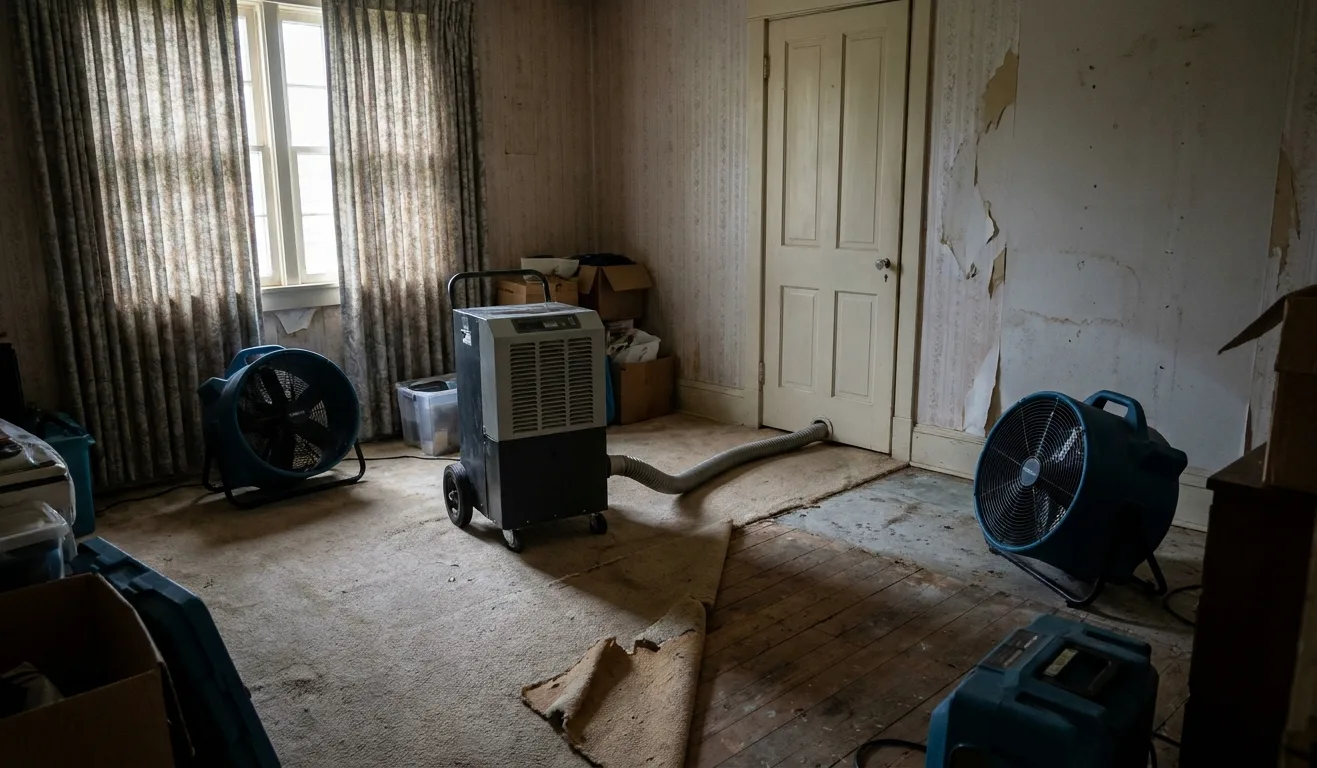
Refrigerant dehumidifiers sit central to the wettest zone with exhaust aimed toward dry areas. Air movers angle across floors and into wall cavities at low speed to avoid spreading dust while accelerating evaporation from subfloor and pad remnants.
Daily logs track grain depression and relative humidity. When readings stabilize below 12 percent for 24 hours, units move to the next section rather than run on guesswork.
Material Decisions During Drying
Wet carpet pad is pulled immediately because it holds water against the subfloor. Drywall below the water line is cut six inches above the mark so air can reach the cavity. Insulation that stays saturated after 48 hours comes out to stop hidden mold colonies.
Subfloor plywood that shows delamination is marked for later replacement once drying finishes. Trim and baseboards are removed only when they trap moisture against the wall plate.
Homeowner Steps Before Arrival
Shut off the water source if accessible and safe. Remove standing water with a shop vac or towels only on hard surfaces. Open interior doors and run ceiling fans on high to start air movement without spreading debris.
Avoid turning on HVAC systems that pull air from wet rooms. Move furniture legs off carpet edges so technicians can access the floor without delay.
Dehumidification and Drying questions
How long does Dehumidification and Drying take?
Drying time depends on material thickness and initial moisture load. Technicians check readings each day. Most wall and floor assemblies reach target dryness in three to five days when equipment is sized correctly and cavities remain accessible.
Will drywall need removal during drying?
Only saturated lower sections get cut. The goal is to open the cavity enough for airflow. Upper drywall that tests dry stays in place and receives surface drying only.
Can carpet stay in place while drying?
The pad underneath must come out because it bonds moisture to the subfloor. Carpet itself can often stay if technicians lift and stretch it over air movers, but heavy saturation usually requires removal.
What happens to wet insulation?
Batt insulation that holds water is removed to prevent mold. Blown-in cellulose is extracted with a vacuum once drying starts. Closed-cell spray foam usually dries in place unless it separates from the sheathing.
Schedule Dehumidification and Drying
Call Same Day Water Damage Restoration to measure hidden moisture and place the right drying equipment.