About Same Day Water Damage Restoration
Same Day Water Damage Restoration receives service calls and dispatches technicians equipped for extraction and drying. Crews examine water migration through flooring and walls. They identify which materials require removal versus drying in place. Findings get stated directly to the homeowner before any work begins. Areas receive final clearing of debris and equipment once drying targets are met.
Questions about a job? Start on the Same Day Water Damage Restoration homepage or call (833) 989-6325.
Meter Based Checks
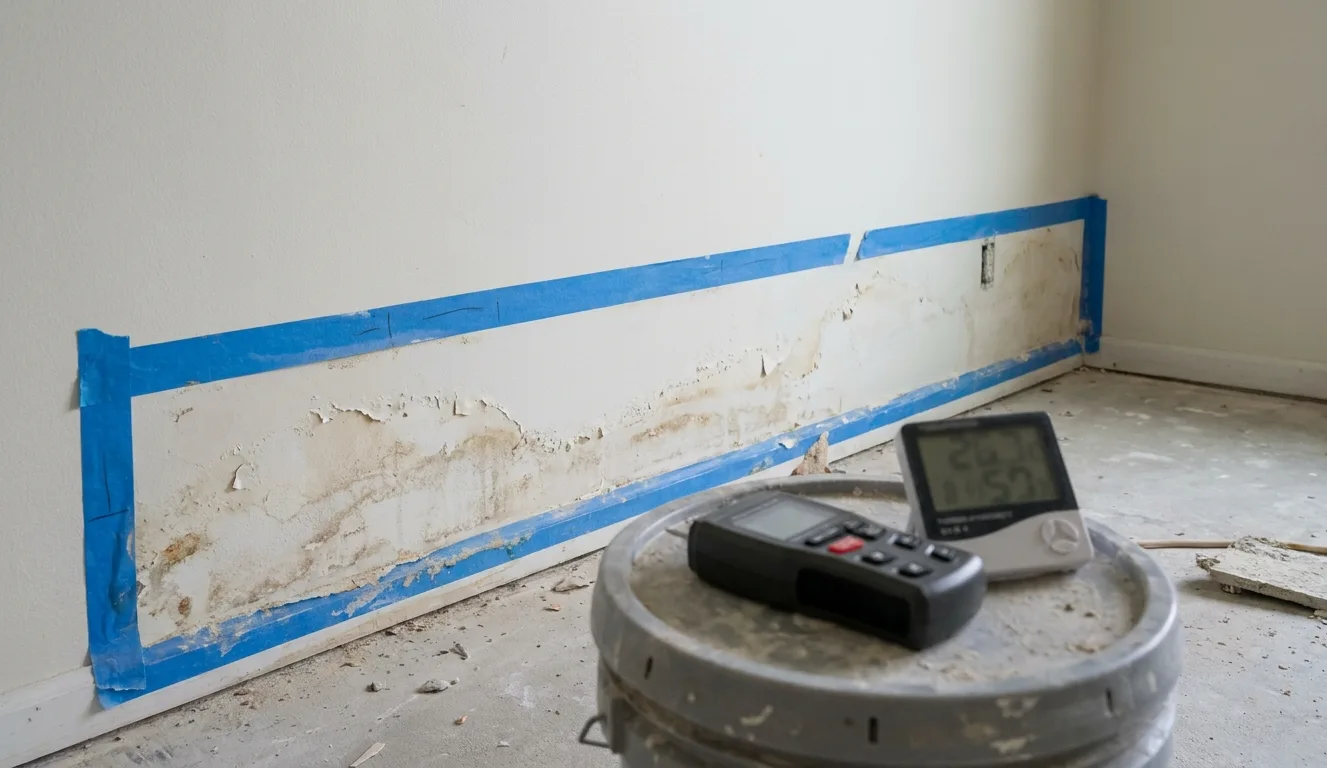
Technicians record readings on drywall, subfloor, and insulation before any removal. Only saturated sections are marked for extraction.
Material Removal List
Wet carpet pad and lower drywall are pulled when meters show prolonged saturation. Homeowners see each item noted on the job sheet.
Direct Findings Report
Crews state moisture paths and required cuts without added steps. Every decision links to visible water lines and meter data.
Cleared Work Zone
All debris and drying gear leave after final readings. Floors and walls stay accessible for next trades.
Call Intake and Dispatch
Calls come in with details on water source and affected rooms. Technicians note the time of the event and materials involved such as carpet or hardwood. Equipment loads include pumps, meters, and air movers. Dispatch sends the crew to the address with the reported scope. Homeowners receive confirmation of arrival window and what to move away from walls if safe.
No restoration starts without an on-site check. Technicians verify the water category and path through baseboards. They test for hidden moisture behind cabinets. This step prevents missed saturation in subfloor layers. Homeowners stay updated on initial observations before any demolition.
On-Site Inspection Process
Technicians enter and isolate the water path from origin to farthest reach. Meters check moisture content in drywall up to eighteen inches above the floor. Insulation behind wet walls gets probed for saturation. Carpet pad is lifted for inspection. Subfloor delamination gets marked where present.
Findings list every section requiring action. Wet carpet gets separated from tack strip when pad removal is needed. Affected drywall sections are noted for cutting. Homeowners see the marked lines and receive the reason each cut occurs. No material leaves without this documented check.
Findings and Scope Explanation
Technicians walk the homeowner through each area and state what must come out. Wet pad is removed because it holds water against the subfloor. Insulation in exterior walls stays wet too long for drying alone. Drywall below the moisture line is cut to allow airflow behind the cavity.
Options for drying in place are given only when readings support it. Subfloor with minor swelling may stay if extraction pulls enough water. Every decision ties to meter readings taken that day. Homeowners approve the listed steps before equipment placement.
Worksite Clearance Steps
Once drying goals are reached, all equipment is removed first. Debris from cut drywall and removed pad is bagged and carried out. Floors are swept for loose dirt. Baseboards stay off until final checks confirm dry readings throughout the structure.
Technicians document final moisture levels on remaining materials. Homeowners receive the list of completed removals and drying locations. No tools or plastic remain on site. The space is left ready for any follow-up trades.