Water Damage Restoration in the USA
Water enters through roof leaks, appliance failures, pipe bursts and foundation cracks. Our technicians arrive and map the affected zones on the first visit. They use moisture meters on drywall, check subfloor for delamination and test insulation for saturation. Standing water gets extracted with pumps before any drying equipment starts.
Homeowners should shut off the water source if safe and move furniture away from wet walls. Do not run HVAC systems that could spread moisture. Our crews document the water line on each wall and note which rooms share the same subfloor. This checklist guides what gets pulled out versus what stays. Pull wet carpet and check subfloor moisture levels right after water damage restoration at Same Day Water Damage Restoration USA sites.
Warning Signs
- Dark streaks on drywall above baseboards
- Soft spots in carpet padding underfoot
- Musty odor from wet insulation in walls
- Buckling hardwood along exterior walls
- Water stains on ceiling near light fixtures
Common Entry Points
Roof leaks around flashing allow water to travel down rafters and pool on ceiling drywall. Appliance supply lines behind refrigerators or washers split and flood adjacent cabinet bases. Pipe joints in bathrooms fail and saturate the subfloor under tile. Foundation wall cracks let groundwater seep into crawl spaces and wick up into rim joists.
Technicians trace the path from the visible water line back to the source. They lift carpet edges to inspect the pad and probe the subfloor with a screwdriver for softness. Insulation behind baseboards gets checked for compression and discoloration. Each material type determines whether it can be dried in place or must be cut out.
Inspection Measurements
Moisture meters read drywall at multiple heights and depths. Thermal cameras locate hidden wet zones behind cabinets. Technicians record relative humidity in each room and compare it to outdoor levels. Subfloor readings above 20 percent indicate the need for pad removal and possible board replacement.
Crawl space insulation is pulled down if water has wicked into the batts. Rim joists get probed for rot at the ends. Electrical outlets near the water line are checked for corrosion before any drying fans are placed. These readings set the drying plan and the list of materials to extract.
Material Removal Steps
Saturated carpet pad is rolled and discarded first because it holds water against the subfloor. Baseboards are pried off to allow airflow behind drywall. Wet drywall is cut four to six inches above the water line and removed in sections. Insulation behind the cut line is pulled out and bagged.
Subfloor plywood that shows delamination gets marked for replacement. Hardwood flooring is lifted board by board when cupping is severe. Our technicians bag all removed materials on site and haul them away. Only after extraction is complete do dehumidifiers and air movers get positioned for the drying phase.
Repair and Replacement
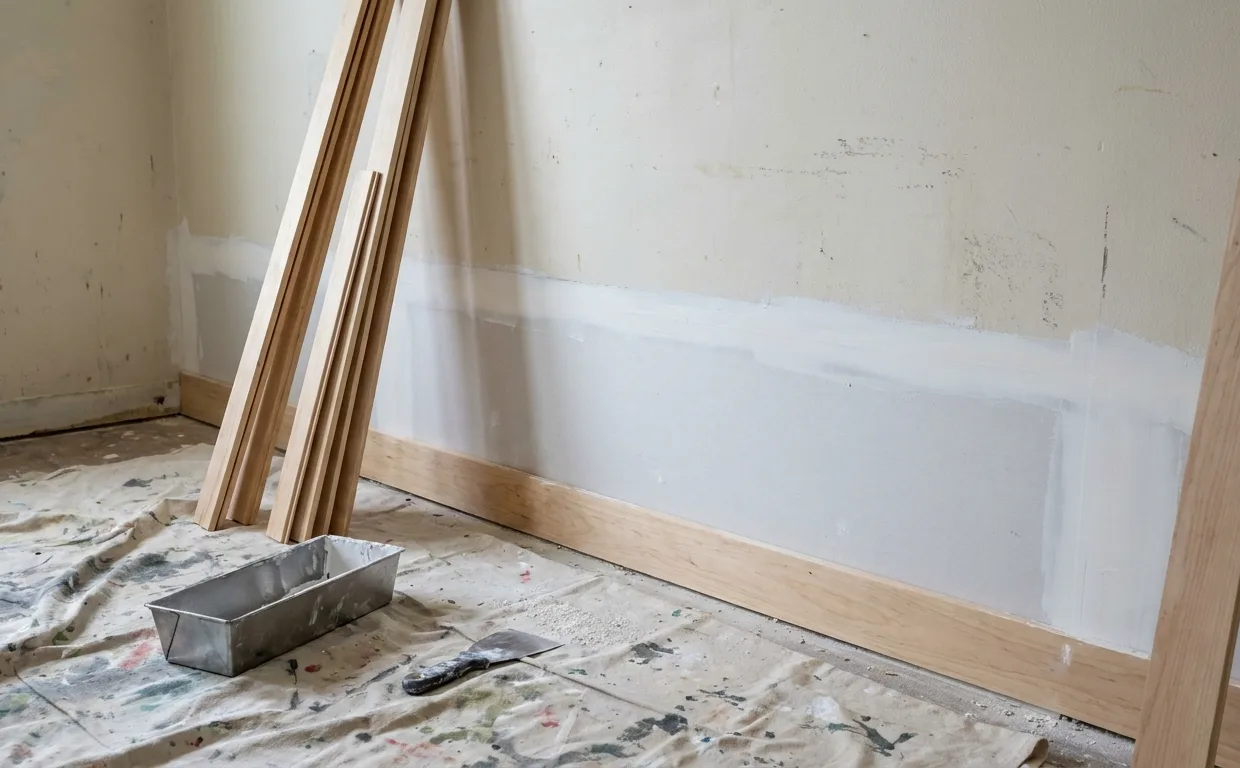
New drywall is hung with the correct thickness to match existing walls. Joints are taped and coated in layers to prevent future telegraphing. Subfloor sections are screwed down with construction adhesive on joists. New insulation is installed in walls before the drywall goes up.
Baseboards are reinstalled after painting. Carpet pad is replaced with matching thickness and the carpet is stretched back into place. Technicians check moisture levels one final time before any finishes are applied. This sequence keeps the structure dry and avoids callbacks from trapped moisture.
Water Damage Restoration questions
What should a homeowner do first when water appears?
Turn off the water supply if the source is visible and safe. Move items away from wet walls. Avoid running fans or HVAC that could spread moisture. Call Same Day Water Damage Restoration so technicians can measure and extract before materials swell further.
Which materials are usually removed?
Wet carpet pad, saturated insulation and drywall below the water line are cut out. Subfloor sections that delaminate are replaced. Baseboards are removed to expose the wall cavity for drying. Technicians decide on site based on meter readings.
How do technicians decide what stays?
Moisture meters and thermal scans show which drywall, subfloor and insulation can dry in place. Materials above the water line with low readings remain. Heavily compressed or moldy items are removed. The goal is to leave only dry, salvageable structure.
What happens after water extraction?
Dehumidifiers and air movers are set in each affected room. Technicians monitor moisture daily until readings return to normal. New drywall, insulation and flooring are installed only after the structure tests dry. This prevents hidden moisture from causing later problems.
Water Damage Restoration Across the USA
Technicians inspect drywall, subfloor and insulation then remove what cannot be saved.