Appliance Leak Cleanup in the USA
Appliance leaks start at supply lines, drain hoses, or internal valves. Our technicians isolate the source by checking shutoff points and testing pressure before water reaches subfloor or drywall. We remove standing water with extractors and place air movers to pull moisture from wood and concrete.
Refrigerator ice makers and dishwasher pumps fail from mineral buildup or cracked fittings. Same Day Water Damage Restoration crews pull back baseboards to inspect for hidden water paths. Affected insulation gets cut out and pad is discarded when saturation exceeds safe levels. Dry sewage affected areas post appliance leak cleanup and access Same Day Water Damage Restoration homepage for USA information.
Warning Signs of Appliance Leaks
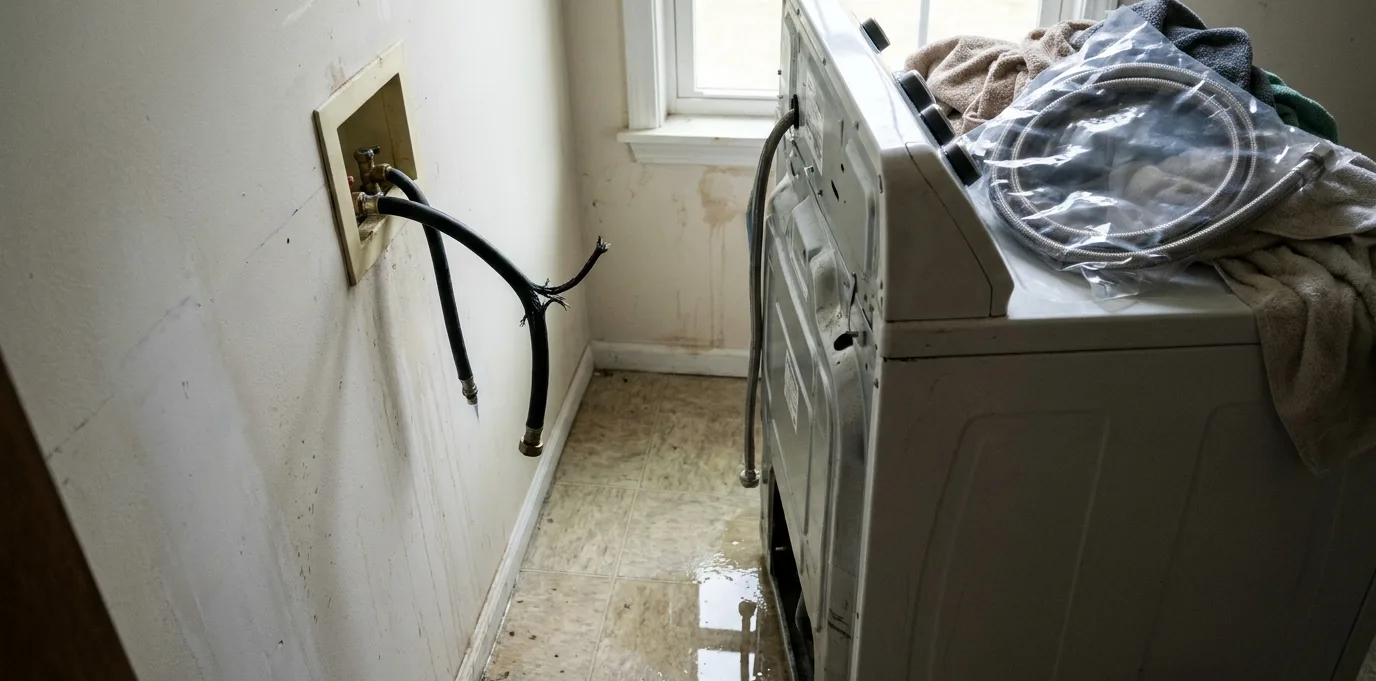
- Pooled water under the appliance base
- Musty smell near the kitchen or laundry area
- Soft spots in vinyl or laminate flooring
- Water stains on lower cabinet sides
- Unexpected rise in water meter readings
Inspection Points for Appliance Leaks
Technicians check compression fittings on supply hoses first. They measure moisture content in the subfloor with pin meters and note any readings above twenty percent. Cabinets are opened to inspect the back wall for wicking into drywall tape.
Drain connections on dishwashers receive a pressure test. Ice maker lines behind refrigerators are traced for kinks or splits. Any standing water is extracted and the area is mapped for hidden migration under toe kicks.
Materials Removed and Replaced
Saturated carpet pad is cut away in strips. Wet drywall is scored and removed up to the moisture line. Insulation behind appliances is pulled out to prevent mold growth in the cavity.
New shutoff valves and braided stainless hoses are installed where rubber lines show cracks. Subfloor plywood sections are replaced if delamination has started. Baseboards are reinstalled after drying confirms zero moisture.
Homeowner Steps Before Arrival
Turn off the appliance water supply at the wall valve. Unplug the unit to stop further operation. Move small items away from the leak area so technicians can reach the floor quickly.
Place towels only to contain spread, not to absorb large volumes. Note the exact time the leak was noticed. Avoid walking through the water to prevent tracking moisture into other rooms.
Repair and Install Options
Technicians replace faulty inlet valves on washing machines and dishwashers. Full hose sets are swapped for reinforced versions. Refrigerator drain pans are cleaned and resealed when cracks allow overflow onto the floor.
Crawl space access is opened if water has traveled under the slab edge. Dehumidifiers run in the affected zone until readings stabilize. Final checks confirm no residual moisture remains in wood framing or particle board.
Appliance Leak Cleanup questions
What appliances most often cause leaks?
Washing machines top the list due to drain hose clogs and inlet valve wear. Refrigerators follow from ice maker line failures. Dishwashers leak at door gaskets or sump pumps after years of detergent residue buildup.
How do you find hidden appliance water?
Moisture meters scan floors and walls for elevated readings. Infrared cameras reveal temperature differences behind cabinets. Baseboards are removed in sections to trace water trails back to the appliance connection point.
Can I reuse wet carpet after an appliance leak?
Pad is always discarded when water sits longer than a few hours. Carpet can sometimes be salvaged if extraction happens fast and no sewage is involved. Technicians test for backing separation before deciding on reinstall.
What parts do you carry for appliance repairs?
Braided supply hoses, quarter-turn shutoff valves, and drain line clamps stay on the truck. Replacement ice maker tubing and dishwasher door seals are stocked for common models. Custom cuts for drywall and subfloor are made on site.
Schedule Appliance Leak Cleanup
Contact Same Day Water Damage Restoration to inspect appliance connections and remove water from floors and walls across the USA.